
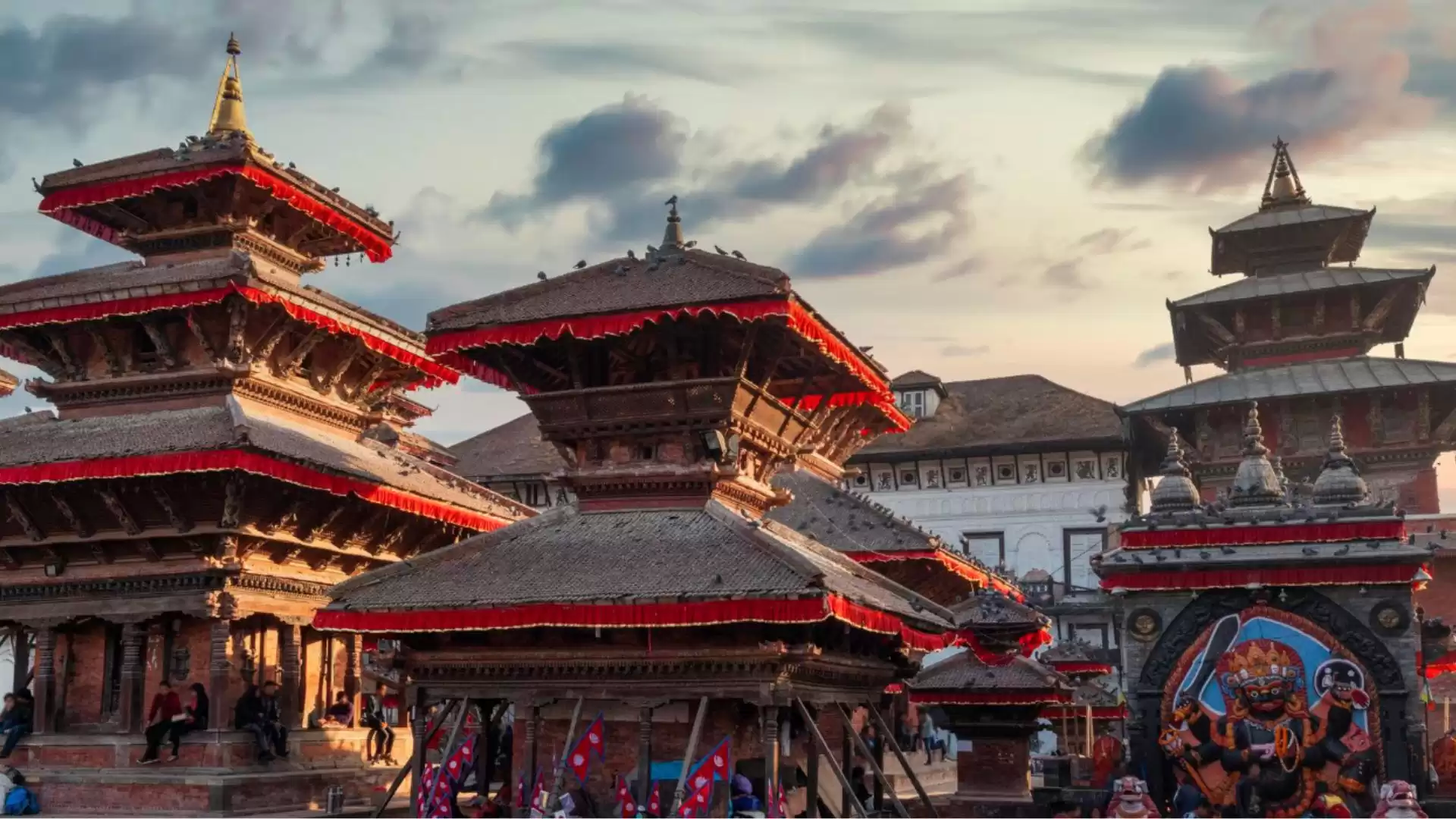
Kathmandu, the capital city of Nepal, is the historical heart that blends the modern lifestyle with traditions and culture inspired by history and geographical landscapes. The ancient temples and monuments reminisce the authenticity of the Nepali culture and are of colossal historical significance. Kathmandu coalesces ancient traditions and modern lifestyles, embracing culture and heritage. Nepal is known for its spiritual importance and sacred sites, including seven UNESCO World Heritage Sites.
The majestic pagoda temples of Kathmandu city rise against the sky, reflecting the grandeur of Nepal, while the attention to detail on each corner narrates the past. Kathmandu is a city full of contrasts, where bustling streets meet serene spiritual sites and thrills. This blog takes you from iconic places to the hidden treasures of Kathmandu, a journey to be experienced.
Why is Kathmandu a cultural and Historical Hub?
Kathmandu, known for its exquisite artistry and timeless architecture, is home to diverse cultures. The Newari people are the earliest inhabitants conserving their culture since time and situations. Kathmandu's rich historical heritage and diverse religious traditions, along with its rule under the Malla and Shah dynasties, have established the city as a cultural and historical hub. Additionally, its role as a crossroads for ancient trade between India and Tibet has fostered both cultural and economic exchange. As the gateway to the Himalayas and a starting point for treks, Kathmandu further solidifies its significance as a center of culture and history. A brief visit to Kathmandu reveals the profundity of traditions and the awe of Nepal's natural landscapes, creating memories that stretch long after the journey ends.
Kathmandu is the live canvas blended with colors and intricate designs of ancient temples, showcasing the lifestyle that different dynasties of Nepal lived through. Every corner of the streets of Kathmandu showcases history and takes a journey through time- as the culture is deeply rooted in spirituality, faith, and timeless traditions. Kathmandu pulsates in the presence of Living Goddess Kumari. The assets of Kathmandu are its people and their warmth and eagerness to share their culture with the world.
Kathmandu Durbar Square
Kathmandu Durbar Square is a manifesto of ancient period royal architecture, ancient palaces, and exquisite Newari culture. A Kathmandu Durbar Square, also known as Basantapur, is a UNESCO World Heritage Site developed during the Lichhavi dynasty and later expanded under Pratap Malla. This historic square is renowned for its stunning wooden-carved architecture and rich cultural heritage, including notable structures such as Kasthamandap, Kumari Ghar, Hanuman Dhoka, and the palace courtyard. Often regarded as the Museum of Temples, the square proximity houses around 50 temples. The intricate wood carving adorns a storied pagoda-style temple called Kasthamandap, made up of a single wood. Kathmandu Durbar Square has a few museums, showcasing artifacts, and the history of Nepal for generations. The Basantapur area features three memorial museum galleries open to both local visitors and tourists for exploration. Kathmandu Durbar Square is the timeless space of spiritual gist, where the past meets the present, offering a glimpse into the soul of Nepal’s local artistry, history, and cultural identity. Kathmandu Durbar Square features the Taleju Temple, an exquisite example of Newari temple architecture. It is the tallest temple in the square and is open to the public once a year during the Dashain festival. Bassantapur is marveled with the awe-inspiring Swet Bhairav, a striking statue of Lord Shiva’s fierce avatar, and a 17th-century stone masterpiece of Kal Bhairav depicting the fierce form of Lord Shiva. It is best to Visit early in the morning to avoid crowds and capture the best photos under the morning sun.
Patan Durbar Square
Patan Durbar Square is the whimsical place crafted by local artisans, and each corner in the place is the manifestation of art and rich tradition that has been alive since centuries. This ancient square is located in the heart of Patan (Lalitpur), is an architectural marvel and home to the former palace of the Malla Kings, a secular place with temples and vihars reflecting the time era back then. The depth of the place is revived each time by the vibrant Newari festivals that happen more often and are a must see sight. The high wooden chariots are pulled by the public all over its alleys, with youths dressed up in cultural dress and musical instruments, and the lakhey(masked) dancing figure is a must to experience. The enchanting earthy palaces, courtyard, and pagoda style temples and a bronze artifact museum delves into the culture and lifestyle people live. Tusha Hiti, a sunken bath water spout made of gilt copper and the stone idol replicating Krishna mandir in the middle is the masterpiece and combination of both culture and artistry.
Patan is highlighted with the wooden carved windows, called Akhi Jhyal is a labyrinthine mastery. Krishna Mandir, built around the 17th century showcases Shikhara style architecture, carved on a single stone, is the splendid masterpiece of Nepalese architecture and is dedicated to the most revered Hindu God,Lord Krishna. Kubheshwar, the five storied pagoda temple and the Jagat Narayan Temple are other famous Hindu temples dedicated to Lord Shiva and Lord Vishnu respectively. Another astounding place is the Mahaboudha, a terracotta art engraved with figures of Lord Buddha is revered by people following Buddhism. HIranya Varna Mahabihar, Rudra Varna Mahavihar are the other Buddhist places to stop by to see the secularity. Entrance of Patan Durbar Square has a huge stone figurative of Lord Ganesha with 16 arms is the rarest form of the deity. You can find the shopping arcade to shop souvenirs, handicrafts and paintings.
Bhaktapur Durbar Square
Bhaktapur is the sacred city, a hub of artistic expression evokes a sense of nostalgia.
Located 12 km to the east of Kathmandu, Bhaktapur is a haven of temples, and the showstopper Bhaktapur Durbar Square of Medieval Nepal portrays the lifestyle during the Malla Reign. The open space below the blue sky and the high brick red temples built on the top plinth of the stairs in pagoda style is the epitome of architectural mastery that truly commemorate the glory of the Nepali culture. There is a huge bronze nepali bell beside the exquisitely carved Vatsala Devi Temple is an allegory of devotion to the divine goddess Taleju, the lineage goddess of the Malla Kings. The big stone lion door guardians, and the sculpture of King BHupatindra Malla on a stone pillars illustrates the devotion. Nyatapola (Nyata means five, and Pola means the tiers in Newa Bhasa) Temple, is one of the most iconic five storied temple the Tantri deity of Siddhi Lakshmi. The temple has magnificent idols of Astamarika, divine goddesses showcasing explicit woodcarving. The Dattatreya square and The Bhairav Temple are other gems that pilgrims pass by, as mythology remarks their significance.
Near Bhaktapur Durbar Square is a large pond with statues of deities. Bhaktapur is truly a place of devotees, a serene place to walk around, ponder, and enjoy the native lifestyle trying pottery, and shopping eye-catching items here and there.
Changunarayan Temple
Changu Narayan Temple, the oldest Vishnu temple dating back to around 464 AD was built by Lichhavi King Manadeva. It is 18 km east of Kathmandu city. The bedizened temple located in Bhaktapur has the oldest inscription of Nepal called Shilapatra dates back to 5th century. It was made by a Lichhavi king Manadeva at around 464 AD dedicated to the severed headed form of Lord Vishnu. Adorned with the ornate wooden sculptures of multiple deity figures in the struts and brass gajur (topmost part above the temple’s roof ), Changunarayan temple is two tiered pagoda style, featured in UNESCO World Heritage site in 1979. The entrance features the celestial bird called The Gruda, human faced bird seated on his knees is the flying carrier and the topmost devotee of Lord Vishn. Around the temple vicinity, travellers can find the temples of Lord Shiva, Ashta Matrika, Chhinnamasta, Kileshwor and Krishna inside the courtyard of the main temple. There are four entrances to the temple each of which are guarded by life-size pairs of animals such as lions, mythics sarabhas, griffins and elephants. The ten incarnations of Lord Vishnu and the other idols are carved in the struts, which support the roof. The temple stands on a high stone plinth and has sophisticated idols of ten incarnations of the Lord Vishnu in the struts. The entrance of the temple is jeweled with intricate carvings of stone carved snakes, called Nagas. Other awe stroking epitome of brilliance include 7 century sculpture of Garuda Narayana, Sridhar Vishnu and brass statues of King, Bhupalendra Malla and his queen of 17th century. Changunarayan temple rekindles the history and culture of Nepal, unveiling the beauty of the land.
Swayambhunath Stupa
Swayambhunath Stupa, located at the northwest of Kathmandu Valley on a serene hilltop is the most revered Buddhist cultural heritage.
This UNESCO World Heritage Site is an amalgamation of wisdom, culture, and spirituality that offers the bird’s eye view and stunning landscapes of the entire Kathmandu City. It is also known as the Monkey Temple, as the monkeys inhabit the surrounding forest. Swayambhu, which translates to self-existent, is believed to have emerged from a lotus in the lake that once filled the entire valley. The place is a spiritual sanctuary, showcasing remarkable artistic and architectural wonders. It features numerous temple shrines and chaityas, nurturing harmony of Buddhist and Hindu traditions in one sacred space. The majestic stupa of 101 ft at the top of the hill is a dome-shaped stupa with a 13-tiered conical ascension, representing five elements of nature- air, heat, earth, fire, and space dwells like existence and enlightenment. The stupa, featuring beautiful Buddha’s eyes overlooking the entire valley, represents enlightenment, wisdom, and understanding of reality. Its mythological and cultural importance has preserved the religion and faith of the people for centuries. The western side of the temple has three magnificent golden statues of three deities- Padmasambhava, Amitabha Buddha, and Avalokiteshwara, and around the stupa perimeter is a road that leads to the stupa via motor road and the stone steps. The stroll through Swayambhunath echoes the essence of Buddhist culture, and visitors can engross themselves in a spiritual ambiance by spinning the prayer wheels encircling the hill along with the devouts. The area is full of festive vibes where devotees immerse themselves in prayers on the occasion of Buddha Jayanti, Buddha’s birthday. The temple complex features various Buddhist shrines and Hindu temples dating back to the Licchavi period, the Harati temple, and the Saraswati temple. An enormous golden-plated Vajra, on the eastern side of the Swayambhunth stupa on a metal plate engraved with a Tibetan mandala, is a mark of imperviousness of wisdom and truth. The Swayambhu area has warm cafeterias, museums, painting and souvenir shops, and peaceful monasteries welcoming visitors.
Pashupatinath
Pashupatinath, a sanctuary of the faithful, is the paragon for HIndus dedicated to the Hindu God Lord Shiva. This is the only temple that worships animals, as the name literally after Pashu-animal, pati- Lord, means Lord of the Animals or Lord of all creatures. The temple is located on the banks of the holy river Bagmati on the bucket list of every pilgrims to seek spiritual evolution and have glimpse of five faced Shiva Linga (symbol of Lord Shiva’s five aspects) Since there is a crematorium on the banks of Bagmati, a walk through the Pashupatinath temple will bring one back to reality. The temple has stunning pagoda style architecture with golden spire is of utmost important cultural heritage, related to enlightenment and liberation. Various sacred rituals and cremation ceremonies performed here reflect the profound insight into the cycle of life and death. The temple exudes a serene and peaceful energy, making it ideal for introspection. The temple complex is full of small shrines, ashrams, bronze and stone statues each with mythological and religious significance. The sprightly energy of Pashupat blazes with vibrancy during Maha Shivaratri, darkest night of the year, where pilgrims, sadhus smeared in ashes, and ascetics stay awake all night utilizing the energy revering Lord Shiva and contemplating on the self. In addition, during Teej women observe fast and seek blessings from Lord Shiva to grant their husbands long lives.The temple is equally packed with worshippers on Ekadashi, the eleventh lunar day. Pashupatinath Temple isa timeless symbol of Nepal's spiritual essence, cultural richness, and architectural grandeur, offering every visitor a profound connection to divinity and history.
Boudhanath Stupa
Boudhanath stupa, located 8km east of Kathmandu, is another magnificent UNESCO-listed world heritage site. It is the largest stupa in the country. The vibrant area has a walkway path encircling the vicinity of the stupa. The stupa features a 100 ft diameter dome-shaped stupa standing on the plinth, has a square gilded copper harmika eyeing the four directions, and ascending from the harmika are thirteen gilded rectangular steps ascending the top. The area is home to Buddhist monasteries, chaityas, and stupas constructed on the memorials of Buddhas and a revered master, serving as prayer houses to pray for global peace. The Boudhanath Stupa embodies deep devotion, with worshippers ringing prayer bells, circling the stupa, and presenting fragrant herbs. The ambiance is incredibly serene and peaceful.